Qlik, Tableau or Power BI – our final comparison reveals which tool delivers the best results in practice.
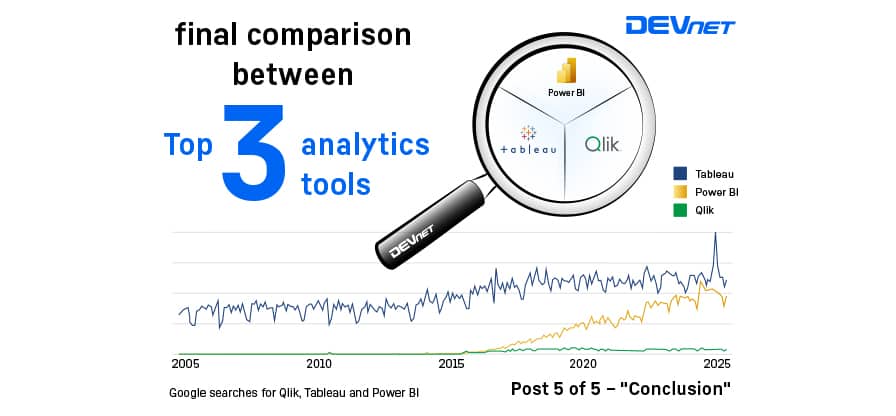
For a final comparison of Qlik, Tableau and Power BI, we start by looking at global users’ interest in these tools. That has developed very differently over the past years.
Qlik’s explorative power
The graph depicting specific Google searches over the past 20 years shows that Qlik has a limited but loyal fan base. Its powerful, flexible and highly automated data integration and especially its associative data modelling with fantastic features for data exploration and pattern recognition have thrilled these users for many years.However, global interest remains far below its two main rivals, mainly due to their growing strengths.
Tableau’s innovative resilience
Tableau has developed impressive visualization capabilities, especially since its takeover by Salesforce in 2019. It further boasts many options for creating complex charts and a plethora of user-generated extensions.Plus, its high frequency of updates and a focus on cutting-edge AI applications excite advanced users in particular.All that innovation has been successful but also necessary to boost resilience in countering the growing challenge from Power BI.
Power BI’s steep rise
The force of that challenge becomes apparent from the steep rise in interest since the software’s release to the general public in 2015.It is partly due to structural factors: its user-friendly interface familiar to Microsoft users; its cost-free desktop version included in MS office; and its seamless integration with other Microsoft products, which makes it a convenient choice for organizations already invested in that ecosystem.The general shift towards cloud-based solutions, where all three tools generate their largest share of innovations and revenue, has benefited all three software packages. However, BI’s integration into Microsoft’s cloud computing platform Azure and its resulting scalability has given it an extra boost.
Matter of preference
In the end, users’ choice for an analytics tool might come down to what they rate most highly: Qlik’s explorative capabilities, Tableau’s impressive visualisations or Power BI’s accessibility.
What is your data analytics front-end tool of choice?